Which Shelving for Which Store? A Guide by Store Type
Shelving and display advice for 12 store types, from boutiques to pharmacies and pet shops to wholesale shops: a guide to choosing the right shelving by product weight, sales style and shop size.
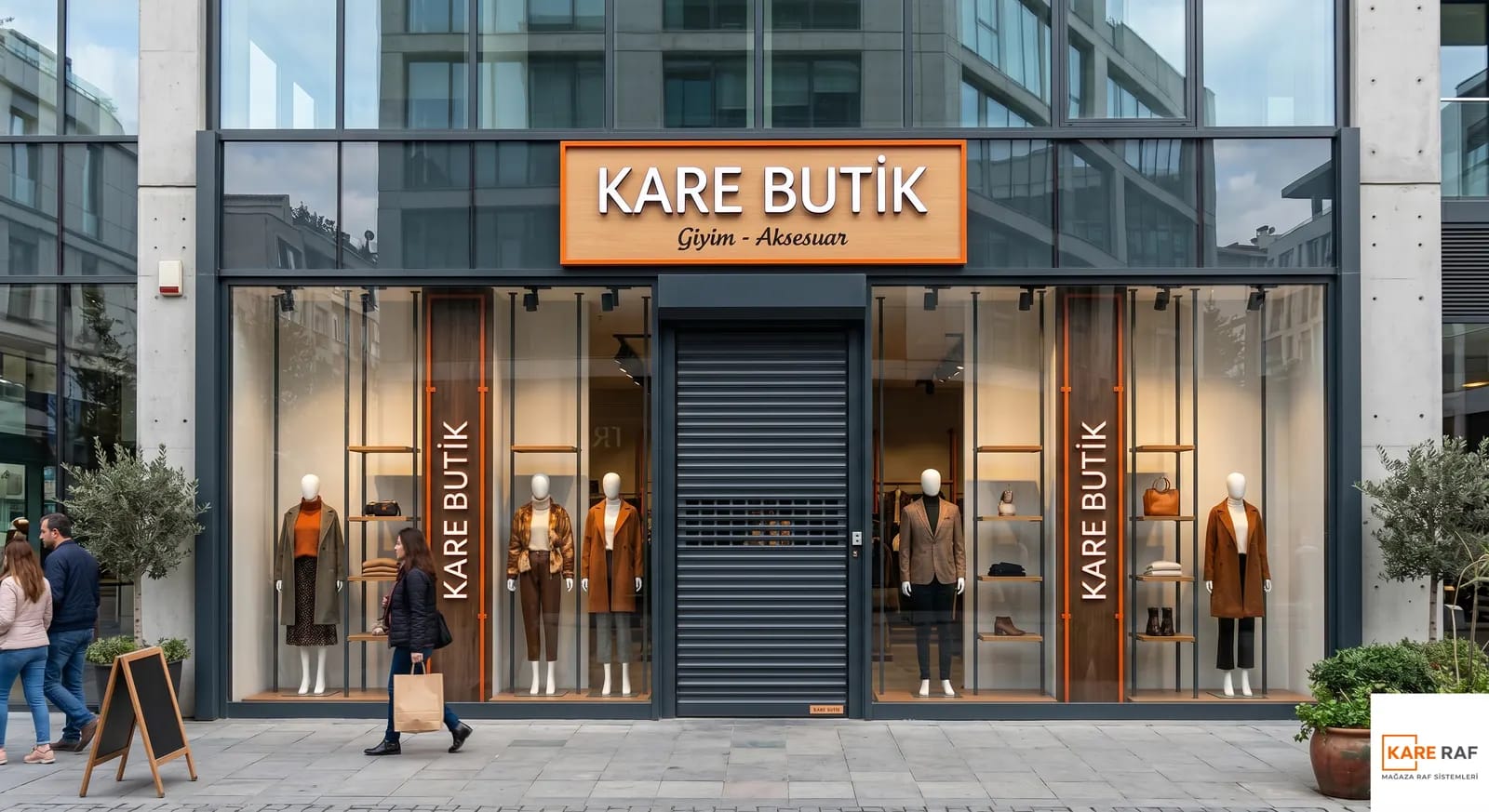
The short answer to "which shelving for which store?": choose shelving not by the name of your sector but by the type of product, its weight, how it is sold (hanging, folded, locked away or self-service) and your shop's floor plan. Hanging products need a wall system, heavy products need sturdy lower shelves, valuable products need lockable display cases, and a wide range of small items calls for slatwall and low islands.
Rather than introducing shelf types one by one, this guide asks the question from the store's side: if you run a boutique, a pharmacy, a pet shop or a wholesale shop, which display setup actually works for you? If you want to get to know the shelf types themselves, see our store shelf types page. The recommendations below come from the needs our Ataşehir-based team has met most often in more than 10 years in the field planning store shelving systems; exact dimensions and layout are always settled during the site visit, by looking at the store itself.
Contents
- Shelving by store type: decision table
- Boutique and modest fashion stores
- Shoe stores
- Pharmacy, cosmetics and perfumery
- Stores that need lockable display cases
- Stationery, toy and pet shops
- Homeware and wholesale shops
- Showrooms and concept stores
- Store size and shelf layout
- Product weight and sales style
- Combining several shelf types
- 5 questions before you decide
Which shelving for which store? Decision table by store type
Treat the table as a starting point: even within the same sector, product mix and shop size differ, so the final setup depends on the individual store.
| Store type | Recommended shelving / display | Why | Related page |
|---|---|---|---|
| Boutique / clothing | Wall system with hanging rails + low central island | Garments show their cut on the hanger; the middle stays free for folded items and outfit displays | Boutique store shelving |
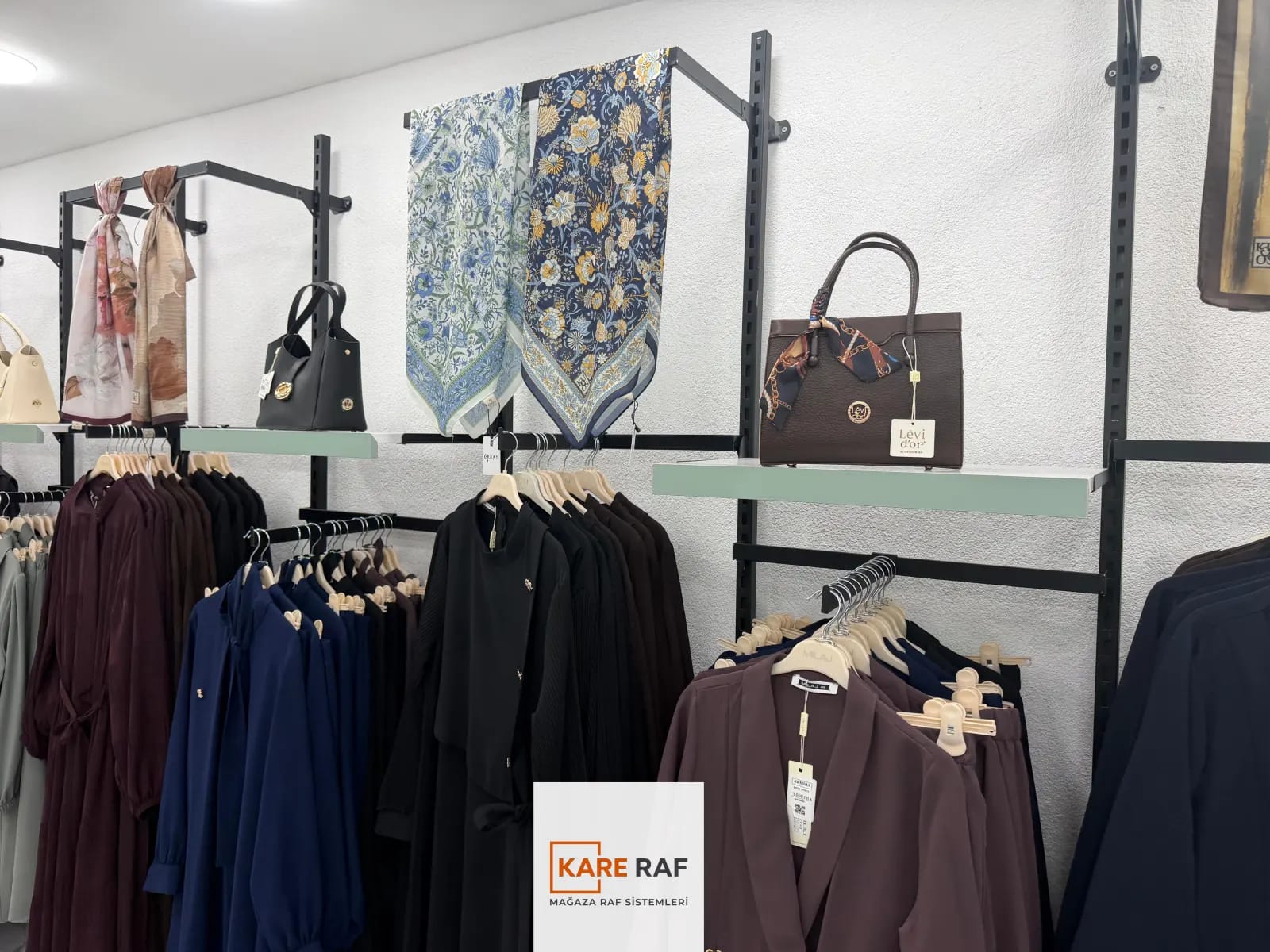
| Modest fashion | Long-garment hanging run + scarf and shawl wall | Long overgarments and evening wear need uninterrupted hanging space; small, colourful items are grouped at eye level | Wall shelving systems |
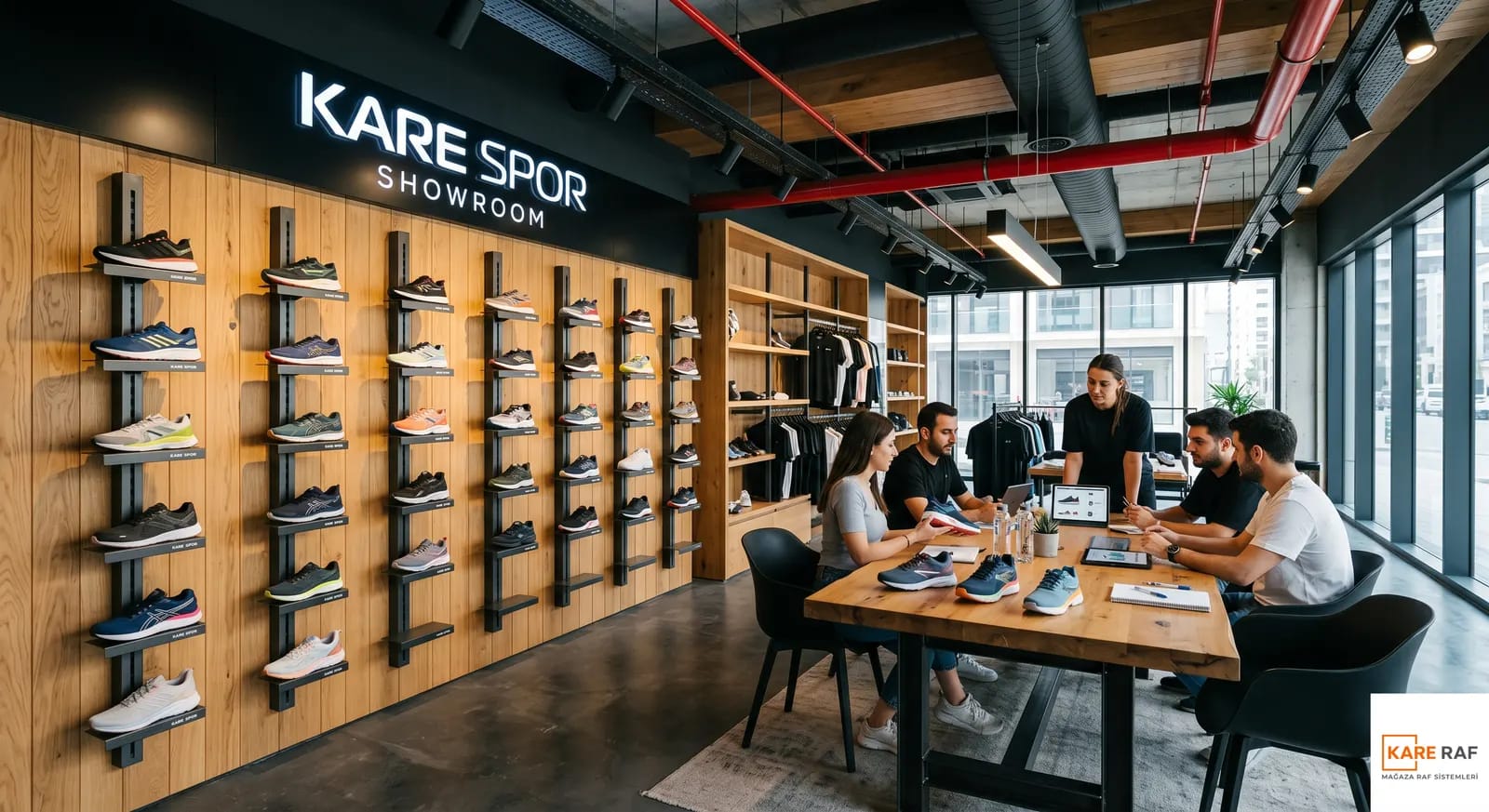
| Shoes | Angled wall shelving + seating and try-on area | Each model reads on its own; size stock stays separate from the display | Shoe store shelving |
| Pharmacy | Shallow wall shelving + behind-the-counter layout | Small boxes stay visible at the front; self-service products in the customer area, the rest behind the counter | Pharmacy shelving |
| Cosmetics / perfumery | Illuminated wall units + tester island + lockable section | Colour and packaging read well under light; premium bottles stay under lock | Cosmetics and perfumery shelving |
| Silver and costume jewellery / accessories | Counter display case + illuminated wall unit | Small pieces need close-up, locked display; the sale happens at the counter | Solutions by sector |
| Phone accessories / tech | Slatwall + lockable display case + demo unit | Blister-packed accessories on hooks, expensive devices in the case; the demo area needs tidy cable routing | Phone accessories shelving, technology stores |
| Stationery / toys | Low mid-floor stand + slatwall | A wide range of small items is split by category; low displays suit children's height | Stationery and toy store shelving |
| Pet shop | Wall system with sturdy lower shelves + hook area for accessories | Heavy pet food sits low, light accessories at eye level | Pet shop shelving |
| Glassware / homeware | Stepped wall shelving + set display island | Heavy and fragile goods on sturdy shelves, sets on the central island | Glassware and homeware shelving |
| Wholesale shop | Compartment wall shelving + sales counter | Samples at the front, boxed stock in the compartments; selling and packing happen at the counter | Shelving product range |
| Showroom | Square-profile post system + central unit with podium | Few products, plenty of space; brand colour and the space around each product take centre stage | Showroom display systems |
Which shelving should a boutique or clothing store choose?
For a boutique, the first shelving decision is whether products will be sold hanging or folded. Garments that crease — dresses, jackets, shirts — should hang; that's why boutiques commonly fit their walls with a wall shelving system that can carry wall panels, hanging rails and shelf boards on the same run. The middle of the store is kept low: a customer walking in should be able to see every wall, while the central island shows folded items, accessories and seasonal outfits. A system with height-adjustable shelves and rails makes it easy to turn a hanging run into a shelf run when the season changes.
Hanging or folded display in a boutique?
Most of the time, both. Hanging shows a garment's cut and length; folded display fits more sizes and colours onto the same wall. In practice, the eye-level section of the wall goes to hanging, the lower section to folded stock and the upper section to visual display. Items that don't crease, such as knitwear, T-shirts and denim, go on shelves; dresses and outerwear go on rails.
How should a modest fashion store lay out its shelving?
In modest fashion, long garments such as long overgarments, trench coats and evening dresses take centre stage; the height of the hanging run is planned so hems neither touch the floor nor cover the shelf below. A wall section set aside for scarves and shawls — small but very colourful items — speeds up the customer's choice when it is arranged in colour groups. A full-length mirror near the fitting room and a small waiting area are also frequently requested in this store type.
What should shelving in a shoe store look like?
In a shoe store, display and stock are kept apart. The walls use slightly angled shelves, or shelves with a front retaining lip, that show a single sample of each model; that way the shoe reads from the front and the side, while size stock stays in the back room or in lidded compartments under the shelves. Low seating poufs and a try-on mirror go in the middle; a customer trying on shoes shouldn't block the aisle. When add-on products such as bags, socks and shoe-care items are gathered near the checkout, they become a natural stop for extra sales. In sneaker stores that prefer boxed display, shelf depth and level spacing should be planned around the box.
How do you choose shelving for a pharmacy or cosmetics store?
How to choose pharmacy shelving
What defines pharmacy shelving is that products are small, boxed and highly varied. A deep shelf is a drawback here, not an advantage: boxes that slide to the back disappear from view and make stock control harder. So the layout combines shallow wall shelving with closely spaced levels; self-service groups such as dermocosmetics, mother-and-baby and personal care in the customer area; and, behind the counter, an orderly shelf and drawer section within easy reach of the pharmacist. Easy-to-clean surfaces, clear category labels and a small impulse area in front of the counter complete the pharmacy layout.
Which displays stand out in cosmetics and perfumery stores?
Cosmetics sell on colour and packaging, so light matters as much as the shelf. Illuminated wall units show products in their true colours, and a tester island in the middle of the store invites customers to try. Premium fragrance bottles, however, sit in a lockable glass section rather than on open shelves. Separating wall modules by brand or category keeps sections from blending into each other and helps customers find what they're looking for quickly.
Which stores need lockable display cases?
If a product is small, valuable and easy to carry off, it needs a lockable display case rather than an open shelf. Three store types fit this description best: shops selling silver, costume jewellery and jewellery accessories; shops selling tech products such as phones, headphones and smartwatches; and shops selling premium fragrances and care products. In these stores, sales mostly happen across the counter: the customer sees the product behind glass, and staff take it out to show it. That's why a setup of glass display cases and counter display cases handles both presentation and security. On wall units, lockable glass compartments and open shelves can be planned side by side: in a phone accessories store, expensive devices sit in the case while affordable accessories such as cases and charging cables hang on hooks.
Which shelving suits stationery, toy and pet shops?
What these three store types share is a wide product range and self-service shopping. In stationery and toy stores, setting up low mid-floor stands as category islands in the middle is a practical way to separate notebooks, school bags, craft supplies and toys. For hanging items such as pen sets, glue and blister-packed toys, a slatwall panel display uses the wall far more efficiently. In a toy store, a good rule is to put unbreakable products on the lower levels a child can reach and move fragile, expensive boxes higher up.
What to look out for in pet shop shelving
In a pet shop, the weight difference between products is large. Big bags of pet food and cat litter go on sturdy, low shelves or at floor level; light accessories such as bowls, toys and leashes hang at eye level on hook displays. Setting aside a separate section for bulky products such as aquariums and cages keeps aisles from narrowing and stops the store from looking cluttered.
Which shelving holds up in homeware and wholesale shops?
When choosing store shelving for heavy products, look at the load-bearing structure before the looks. In a glassware and homeware store, cookware sets, porcelain and glassware are both heavy and fragile, so shelf boards must not sag and the front edge should stop products from sliding; heavy sets go on the lower levels and light decorative items higher up. A wholesale shop works differently: customers mostly look at a sample and buy by the box. So the walls are fitted with compartment shelving for stock, samples are displayed at the front, and selling, packing and invoicing all run across a single checkout and sales counter. In shops with narrow entrances inside traditional commercial arcades, the shelving is planned so it can be carried in piece by piece and assembled on site.
Which displays stand out in a showroom or concept store?
In a showroom, the goal is not to hold stock but to show the product and the brand. Space is left around a small number of products; the shelf structure is expected to look slim and to take the brand colour. That's why square-post shelving systems and podium-style island display units made to brand-specific dimensions are frequent choices. Small scenes that show how a product is used, and wide walkways that let visitors move around comfortably, matter more in a showroom than the number of shelves. The same logic applies to concept stores: the shelving should look like furniture carrying the product, not like a stockroom. Planning movable islands and wall modules with adjustable levels also makes it easier to rearrange units when seasonal collections change.
How does store size change your shelving choice?
Two stores in the same sector need completely different shelving setups if their dimensions differ. The general rule: the perimeter is for capacity, the middle is for circulation. Aisle width is generally kept at 90 cm or more so two customers can pass comfortably. Whatever shelf type you choose, the products you most want to sell go at eye level, between 140 and 160 cm.
How should shelving be laid out in a narrow store?
In a narrow, long shop, the two long walls become shelving runs; the middle is left open or given a single row of low units. Placing an eye-catching feature wall or the checkout at the very back draws customers inward. Putting tall units in the middle, on the other hand, makes a narrow store look even smaller than it is.
How do you choose shelving for a small shop?
In a small shop, every centimetre counts. Shelving made to the wall's measurements instead of standard modules also reclaims leftover spaces such as between columns and above the door. Walls are used up to the ceiling, the top level is reserved for back-up stock and the middle of the floor is kept as open as possible. For options that suit small shops, see our page on made-to-measure wall shelving.
What to do in a store with corners and columns
Columns, recesses and projections leave gaps in standard modules. Corner shelving and made-to-measure units that wrap around columns turn these areas into display space; the front of a column can also serve as a small promotion or new-arrivals point.
How do product weight and sales style determine the shelving?
Two variables decide the shelving more than the sector name does: how heavy is the product, and how is it sold? Weight determines how strong the shelf boards and load-bearing structure need to be; sales style determines the display format. The four basic sales styles and what they call for:
- Hanging sales: clothing, bags, blister-packed accessories. Needs hanging rails, hooks and panels.
- Folded or boxed sales: T-shirts, shoe boxes, notebooks, pet food packs. Needs height-adjustable shelf boards and a depth suited to the product.
- Locked sales: silver jewellery, tech products, premium fragrances. Glass, lockable display cases, with sales mostly across the counter.
- Self-service sales: stationery, pet supplies, care products in pharmacies. Open, category-labelled shelving within easy reach, and clear aisles.
Heavy products always go on the lower levels; light, high-margin products at eye level. Loading heavy goods onto an attractive but lightweight unit is the mistake that costs the most to fix later.
How do you combine several shelf types in one store?
Most stores don't open with a single shelf type; wall systems, central islands, display cases and counters work together. Three rules help when bringing them together. The first is height order: a layout that rises from the entrance to the back — low islands at the front, tall walls at the rear — lets the whole store be seen at a glance. The second is visual unity: using the same colour, the same material and the same base line across different units keeps the store from looking pieced together. The third is customer flow: the checkout and counter should sit where customers arrive after walking through the store, and lockable display cases should stay within staff's line of sight. Seeing the layout in three dimensions before production makes this balance easier to strike.
Which 5 questions should you ask before deciding?
- How is my product sold? Hanging, folded, locked away or self-service?
- What is my heaviest product, and where will it go? The choice of load-bearing structure and shelf boards depends on it.
- What are the size and shape of the shop? Narrow and long, full of corners or columns — and how high is the ceiling?
- Where will stock be kept? In the sales area, in compartments under the shelves or in the store's back room?
- What will change in a year? If you expect new categories, seasonal changes or extra modules, choose a system with adjustable levels that can be expanded.
Next step: estimate the cost, see the layout
Once you've settled on the right shelving setup for your store, our page on what drives shelving prices breaks down the cost items. To see the layout before production, take a look at our 3D store visualization service; to pin down measurements and needs on site, leave a free site visit request. If you're torn between new and used, have a look at this comparison of new and used shelving.
Frequently asked questions
What shelving works best for a small shop?
In a small shop, wall shelving made to the wall's measurements and running up to the ceiling is the most efficient solution; the middle of the floor is left open or given a single low unit. Leftover spaces such as between columns and above the door are brought into the display with made-to-measure units, and the top level is reserved for back-up stock.
Should a boutique display clothes hanging or folded?
Usually both. Garments that crease or depend on their cut, such as dresses and jackets, go on hanging rails; items that don't crease, such as T-shirts, knitwear and denim, are displayed folded on shelves. A common layout gives the eye-level section of the wall to hanging and the lower section to folded stock.
What is the difference between pharmacy shelving and supermarket shelving?
Supermarket shelving builds deep, long aisles for fast-moving, bulky packaged goods. Pharmacy shelving is planned shallow with closely spaced levels for small boxed products in a wide assortment; products sit in a single row at the front, and one section behind the counter is reserved for the pharmacist's access.
What should shelving in a shoe store look like?
On the wall, angled shelves or shelves with a front retaining lip that show a single sample of each model; in the middle, a seating area for trying shoes on. Size stock is kept apart from the display, in the back room or in closed compartments under the shelves.
Which stores need lockable display cases?
Stores selling small, valuable and easily pocketed products need lockable display cases: shops selling silver and costume jewellery, phones and tech products, and premium fragrances top the list. In these stores, sales mostly happen across a counter display case.
How should shelving be arranged in a narrow, long store?
The two long walls become shelving runs, and the middle is left open or given a single row of low units. Aisle width is generally kept at 90 cm or more; placing an eye-catching feature wall or the checkout at the back of the store draws customers inward.
What should you look for in shelving for a store selling heavy products?
First check the strength of the load-bearing structure and make sure the shelf boards won't sag; heavy products go on the lower levels. The exact load rating is determined during the site visit, based on the products and the space. Loading heavy goods onto a stylish but lightweight unit is the most common mistake.
Where does Kare Raf install store shelving?
Kare Raf's Ataşehir-based team provides site visits, 3D design, production and installation in all districts of Istanbul, and outside Istanbul on request, with completed projects in Gebze/Kocaeli and Çanakkale.
Get a free site visit and quote for your project
At Kare Raf, our Ataşehir-based team handles store shelving systems, 3D store design, production and installation from a single source, in all districts of Istanbul, and outside Istanbul on request, with completed projects in Gebze/Kocaeli and Çanakkale. For a solution tailored to your store's measurements and your sector, request a free site visit and measurement and we'll come back with a transparent, line-item quote. Call now: +90 506 411 71 90 or message us on WhatsApp.
Last updated:
Related Posts
Shelving Systems
New or Used? The Guide to Making the Right Call When Buying Store Shelving
Used store shelving can be cheaper in the short term; but size mismatches, capacity uncertainty and the lack of a warranty can push up the total cost. We compared new and used honestly.
Shelving Systems
What Is a Square-Post Shelving System? How It Differs from Tapered Uprights, and Which to Choose
A square-post shelving system carries the shelf on square-profile uprights; the tapered upright is the press-formed sheet-steel carrier of classic supermarket shelving. We compared the two on load capacity, installation, aesthetics and price.

Shelving Systems
What to Look for When Choosing Pharmacy Shelving Systems
Pharmacy shelving puts fast access, hygiene, dense stock capacity and medicine safety first. We've compiled the criteria that matter when choosing shelving built specifically for pharmacies.